Colombia's City of Eternal Spring. Over 1 million international visitors in 2024 — and it's not hard to see why. Year-round 22°C weather, world-class culture, and extraordinary value.
Five distinct barrios, five different Medellín experiences — choose the one that matches your travel style and budget.
The expat and tourism hub. Safest neighborhood, highest density of restaurants, bars, coworking spaces, and hostels. Can feel like a bubble, but hugely convenient.
Time Out's "Coolest Street" (Avenida El Poblado) runs through here. More residential, more local — popular with digital nomads who want authentic daily life.
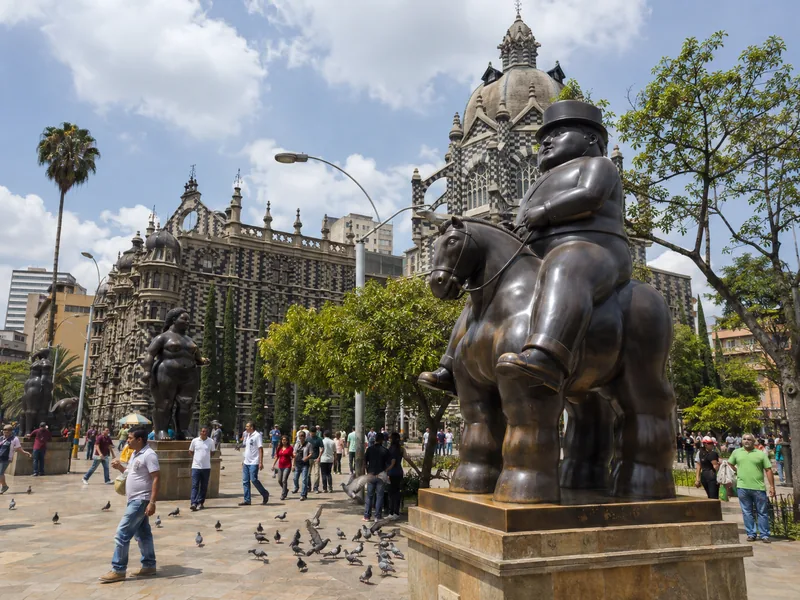
Plaza Botero, Parque Berrio, Metro Line A hub. Busiest, most urban — great for culture and local color. Stay alert with belongings; not for nervous first-timers.
Technically its own municipality but seamlessly connected via Metro. Quieter, leafier, more local. Excellent value. Popular with longer-stay visitors and expats.
Centro Comercial El Tesoro nearby, home of Atléticos Nacional and Independiente Medellín. Real local barrio energy — great food scene and craft beer bars.
One of Latin America's most advanced urban transport networks — integrated Metro, cable cars, trams, and e-scooters make the city genuinely easy to navigate.
The only Metro in Colombia. Two lines (A north–south, B east–west) covering 27 stations. Runs 5am–11pm daily. Clean, safe, punctual. Serves 500,000 riders daily — the backbone of the system.
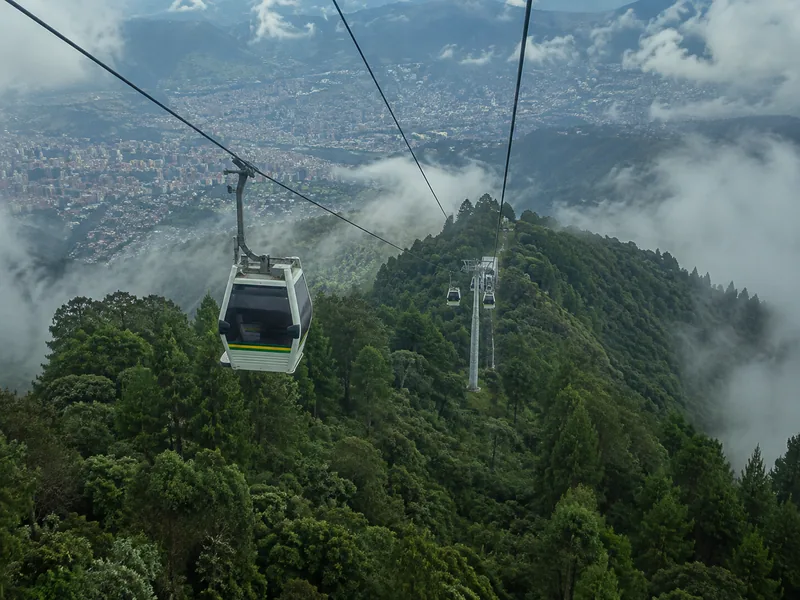
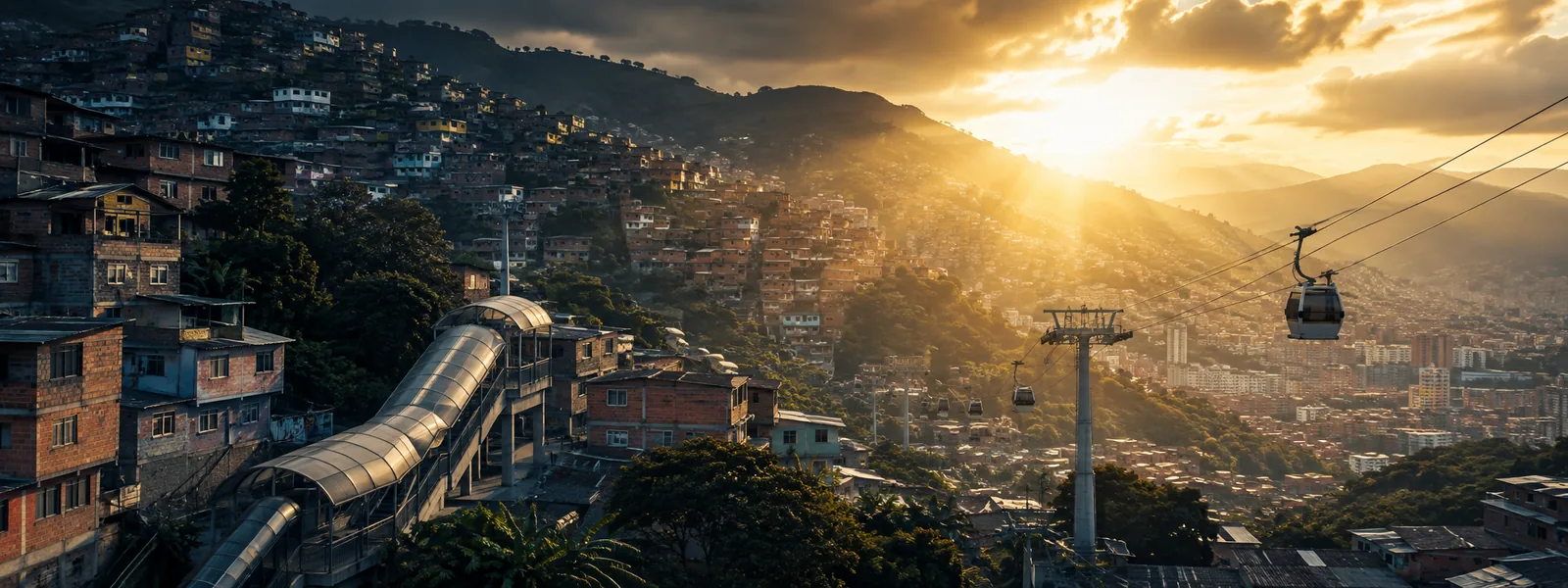
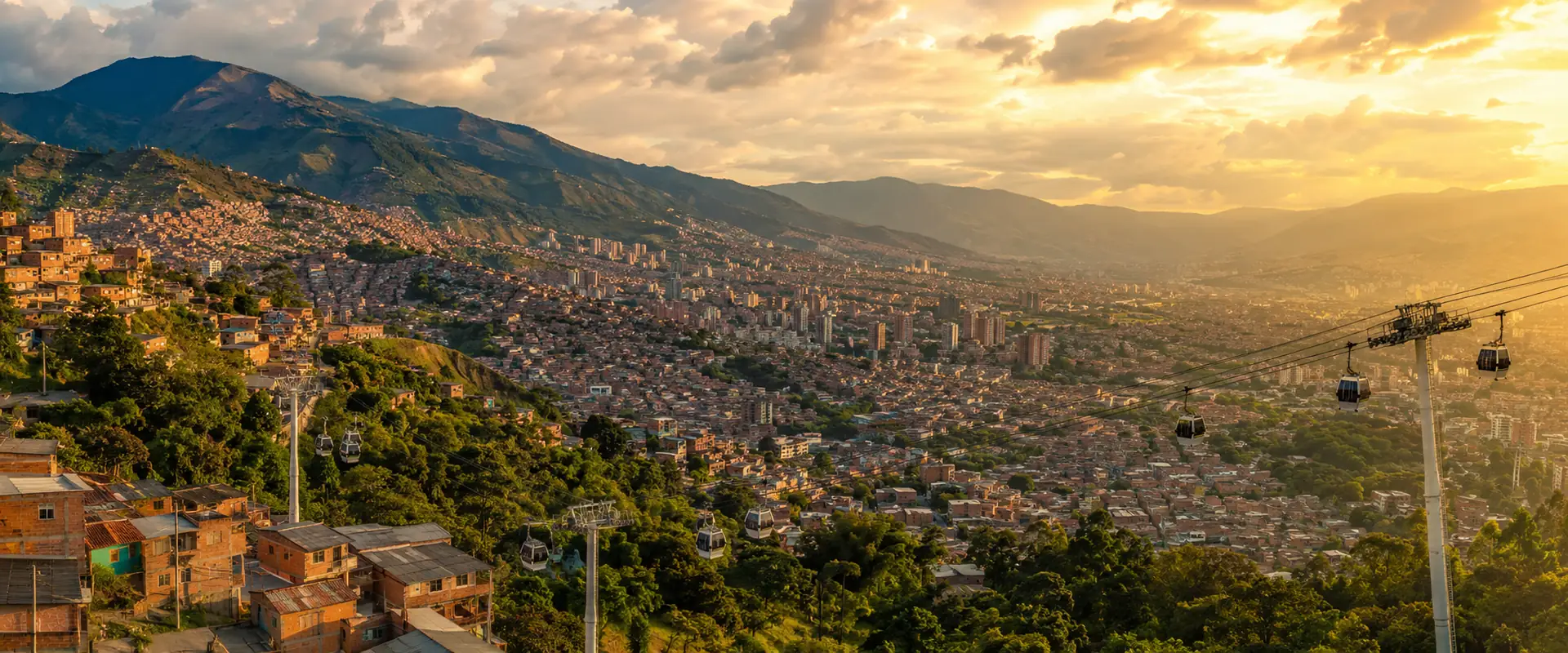
Gondola lines connecting hillside comunas to the Metro — one of the city's signature urban innovations. Lines J, K, L, M, and H. Line K reaches Parque Arví. Included with Metro card.
Medellín's tram line connecting the city center (Industriales) to Argentina station, linking communities in the eastern hillsides. Modern, quiet, and fully integrated with the Metro card system.
Both apps operate widely in Medellín. Strongly recommended over street taxis for visitors — safe, trackable, and predictable pricing. InDriver is also popular. Avoid unmarked taxis hailed on the street.
The airport is 45km from El Poblado. Options: Airporto Express bus (~$5–8, departs regularly, 60–90 min), Uber/DiDi (~$18–30, 45–60 min, most popular), or official airport taxi (~$35–45, negotiate upfront). The Metro does not connect to the airport.
From the world-famous Feria de las Flores to the most spectacular Christmas lights in South America — Medellín celebrates year-round.
Medellín's signature event — a ten-day celebration of flowers, music, and culture. The iconic Silleteros parade features 500+ campesinos carrying elaborate floral arrangements on their backs. Draws 50,000+ international visitors annually.
Award-winning Christmas light installations along the Medellín river. Attracts ~400,000 daily visitors at peak, making it one of the largest light events in the world. Boat rides through the light displays are extremely popular.
One of the world's largest poetry festivals, drawing poets from 30+ countries for a week of free readings, workshops, and cultural events across Medellín's parks and cultural spaces.
Latin America's premier fashion trade fair, showcasing Colombian designers and textile innovation. Open to the public on select days with runway shows, exhibitions, and shopping.
From free world-class art to cloud-forest parks reachable by cable car — Medellín punches far above its weight as a cultural destination.
23 massive bronze sculptures by Fernando Botero in an open-air plaza — entirely free. The adjacent Museo de Antioquia houses 100+ more Botero works and Colombian art ($5–8 entry). One of the most visited sites in the country.
Ride the Metro + two cable car lines to reach 16,000 hectares of cloud forest above the city. Hiking trails, ecological reserve, artisan market, birdwatching, and spectacular valley views. The journey is half the experience.
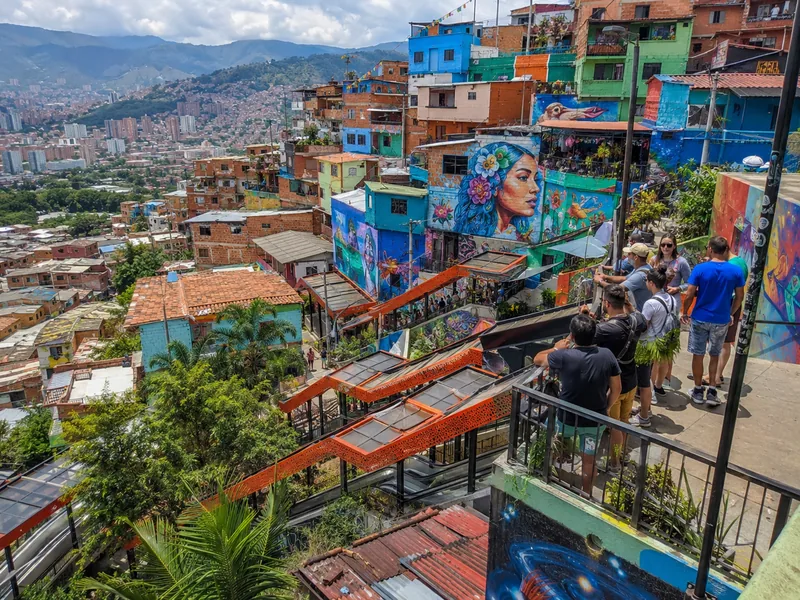
Once Medellín's most violent neighborhood, now its most photographed. 384-meter outdoor escalators connect the hillside community, lined with extraordinary street art, food stalls, and guided tours ($20–30, 4.9★).
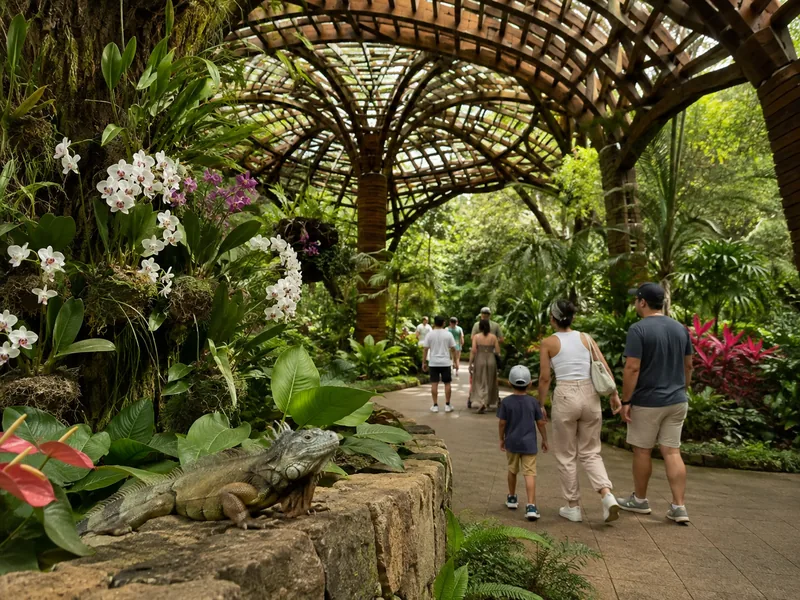
14-hectare urban botanical garden with 4,500+ plant species, a striking modern orquideorama, and regular cultural events. Entirely free entry. A calm green refuge in the heart of the city — great for families and a morning visit.
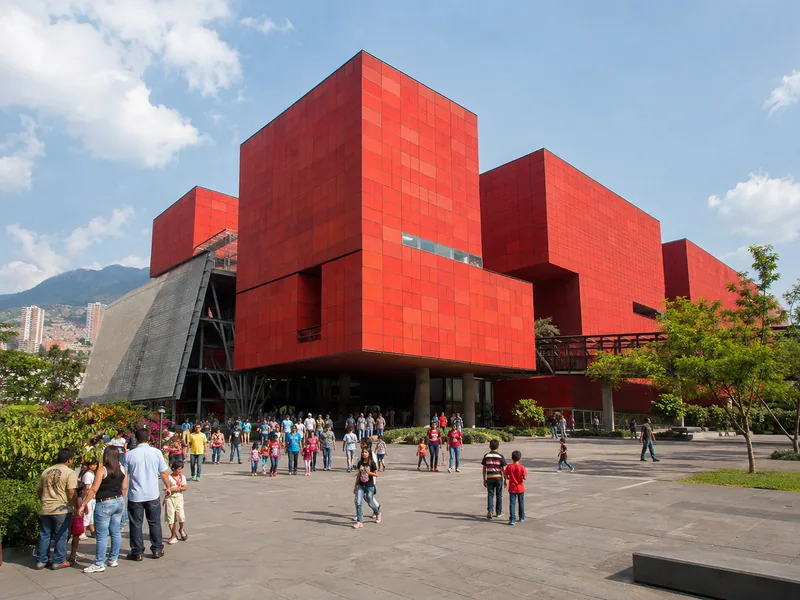
One of Latin America's best science museums — interactive exhibits, a planetarium, aquarium with 400+ species, and the largest freshwater aquarium in South America. Perfect for families. Entry ~$6–10.
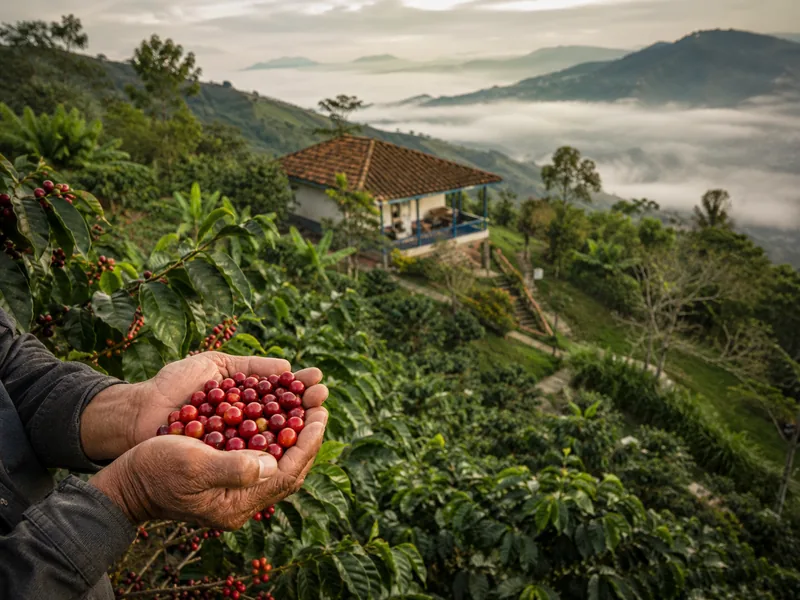
Medellín sits at the gateway to Colombia's Coffee Region. Half-day and full-day tours to working fincas — learn the full bean-to-cup process, walk coffee plantations, and taste extraordinary fresh-roasted Colombian coffee. From $28.
The most dramatic urban turnaround of the 21st century — told in data, awards, and human determination.
6,809 homicides. 381–416 per 100,000 population. Pablo Escobar's Medellín Cartel at its peak. The city seemed ungovernable.
Mayors Fajardo and Salazar invest in the poorest comunas — library parks, outdoor escalators, Metrocable, schools. Architecture as social policy.
Wall Street Journal / Citi "Most Innovative City" award — beating New York and Tel Aviv. UNESCO Creative City of Music in 2015. Lee Kuan Yew Prize in 2016.
300 total homicides — the lowest since 1976. Safer than Chicago, Detroit, Las Vegas, and New Orleans. 1.07 million international visitors. Medellín's transformation is complete.
Monthly budget: $800–1,200 (comfortable). Nomad visa available from Jan 2023 — $300 fee, ~$1,100/month income required, valid 2 years. Coworking from $10/day. Same time zone as U.S. East Coast.
Medellín has made significant investments in accessibility — the Metro system, cable cars, and many major attractions are wheelchair accessible. Here's what you need to know.
All 27 Metro stations have elevators and ramps. Metro cars have designated wheelchair spaces. Staff assistance is available at all stations. The Metrocable gondolas accommodate wheelchairs — ask staff for boarding assistance.
The main tourist district has the most accessible infrastructure — paved sidewalks, curb cuts, and accessible hotel options. The Parque El Poblado and Parque Bello Horizonte areas are generally navigable in a wheelchair.
The botanical garden has flat, paved paths throughout most of the 14-hectare grounds and is considered one of the most accessible attractions in the city. Free admission for visitors with disabilities.
Fully accessible throughout — elevators, ramps, and accessible restrooms. The aquarium and interactive exhibit areas are navigable by wheelchair. Reduced admission available — contact the museum in advance.
Many hillside areas (including parts of El Centro and the comunas) have steep terrain and uneven surfaces. City roads have inconsistent pedestrian infrastructure outside El Poblado and Laureles. Research specific routes in advance.
Uber and DiDi can request larger vehicles for wheelchair users. Specialized accessible transport services exist — ask your hotel to arrange. The airport has full wheelchair assistance available on request.
Book tours, ask a question, or dive deeper into our visitor guides — everything you need to plan an unforgettable trip.